Reading the map

Court surfaces in Toronto.

Surface affects everything: pace, bounce, footing, even how hard your knees feel the next morning. Toronto's public courts are overwhelmingly hardcourt, but a handful of clubs offer the slower, gentler clay experience.

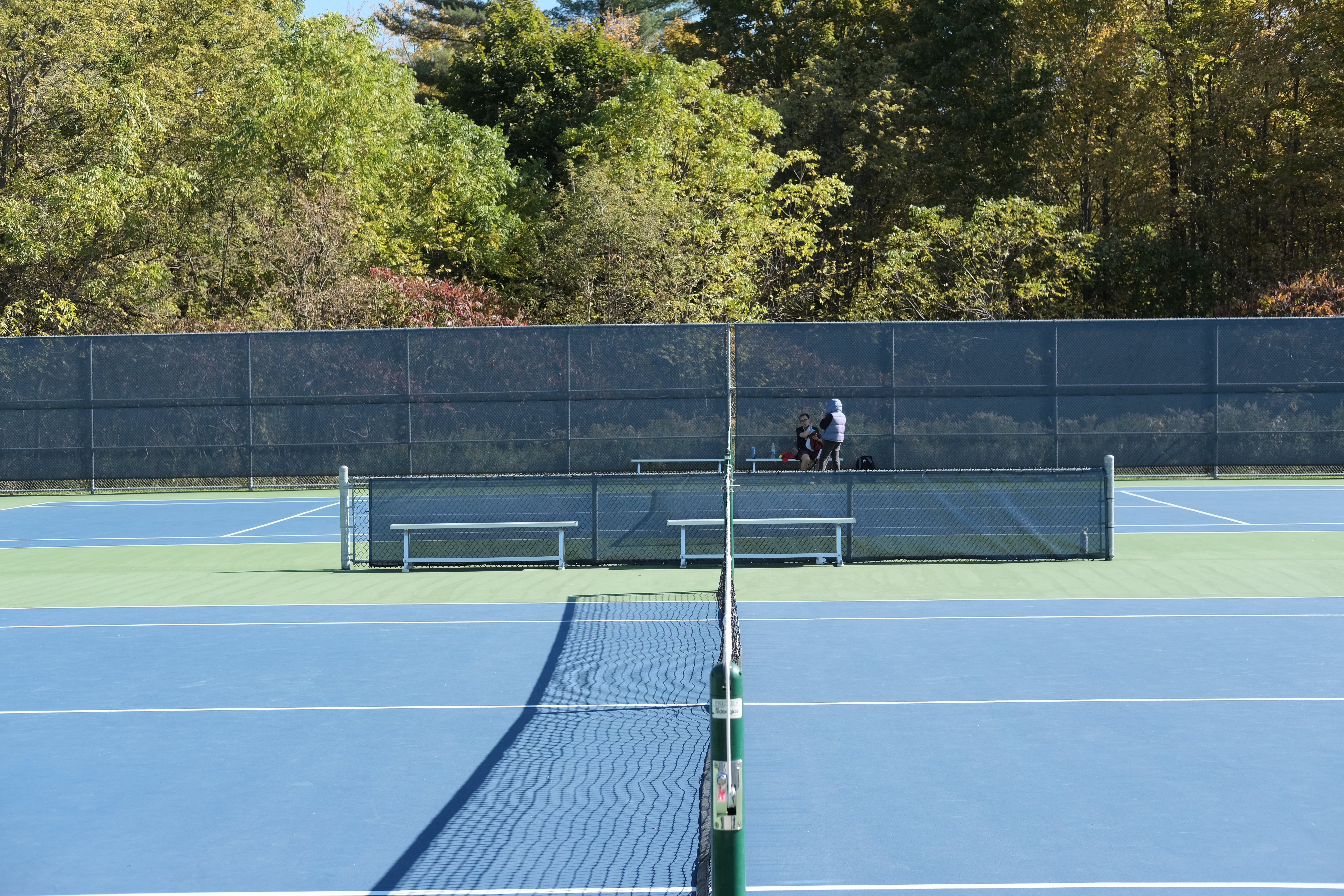
Two outdoor blue and green acrylic hardcourts at the University of Toronto Tennis Centre in Scarborough, with players on the far side and trees in the background.
Acrylic hard court surface at the University of Toronto Tennis Centre in Scarborough. Photo by vzcodes via GitHub.

Hardcourt — Acrylic

The standard for most Toronto clubs and the City's better-maintained parks. Acrylic paint is layered onto an asphalt or concrete base for consistent bounce and grippy footing.

Where to play
  • Loading…
Pace
Medium-fast
Bounce
Predictable
Joints
Tough
Upkeep
Resurface 5–8 yrs
View courts on map

Hardcourt — Asphalt

The classic City of Toronto neighbourhood-park surface. Plain rolled asphalt with painted lines — no acrylic top coat. Often cracked, sometimes patched, always playable.

Where to play
  • Loading…
Pace
Fast
Bounce
Lively, uneven
Joints
Toughest
Upkeep
Minimal
View courts on map

Green Clay (Har-Tru)

Crushed metabasalt rolled into a soft, sliding surface. Easier on the knees, harder on technique. Most green-clay courts in the GTA live behind club gates — the Toronto Lawn, Cricket Club, York Racquets, and a few others.

Where to play
  • Loading…
Pace
Slow
Bounce
High, slow
Joints
Gentle
Upkeep
Daily roll & line
View courts on map

Red Clay

The European classic — crushed brick over a limestone base. Slowest of the slow, beautiful to look at, rare in Toronto. Reserved for premier private clubs that maintain courts to ITF standards.

Where to play
  • Loading…
Pace
Slowest
Bounce
Highest, slow
Joints
Gentlest
Upkeep
Intensive, daily
View courts on map

Grass

The Wimbledon surface, vanishingly rare here. Toronto's natural grass courts are largely ceremonial — kept by long-standing private clubs as a nod to tradition. Expect a low, fast, unpredictable bounce.

Where to play
  • Loading…
Pace
Very fast
Bounce
Low, skiddy
Joints
Gentle
Upkeep
Constant mowing
View courts on map

Artificial Grass

Sand-filled synthetic turf. Mimics the gentler footing of clay with much less maintenance. A small number of GTA clubs use it for shoulder-season play.

Where to play
  • Loading…
Pace
Medium
Bounce
True, medium
Joints
Gentle
Upkeep
Brush & level
View courts on map

Indoor surface notes

Indoor venues split into a few build types — the surface itself is usually hardcourt-acrylic, but the structure around it changes how it feels:

Permanent
Year-round indoor facility with a permanent roof (e.g. Mayfair clubs, Toronto Lawn). Climate-controlled and bookable year-round.
Bubble
Inflatable dome erected over outdoor hardcourts for the winter — comes down in spring. Most City "winter tennis" venues are bubbles.
Field House
Multi-sport indoor facility (typically a university or community centre) where tennis shares time with other programming.

Choosing where to play